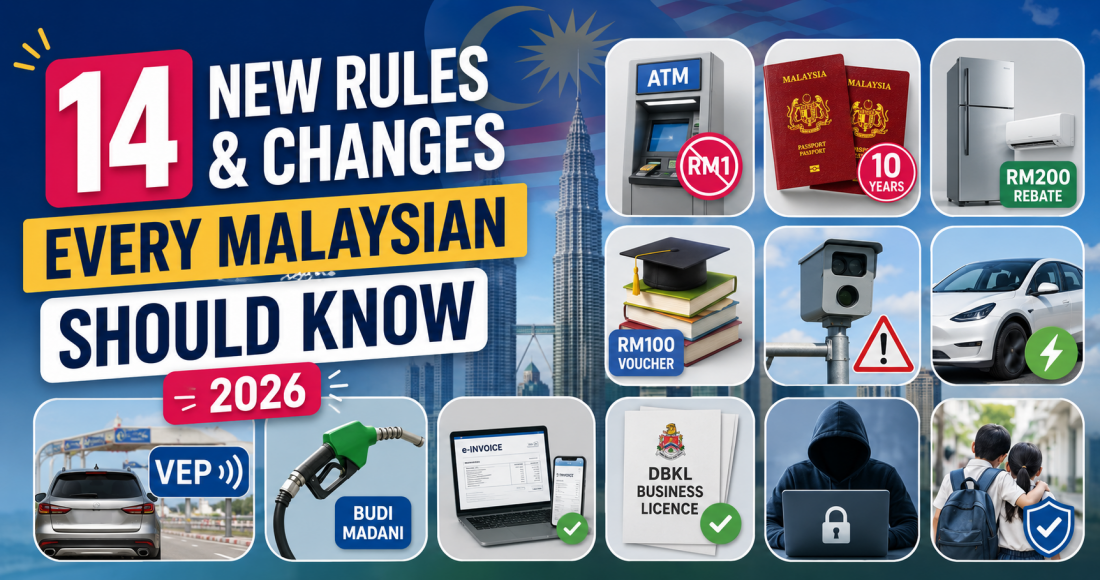

Malaysia has introduced a series of new policies, incentives and regulations throughout 2026 that affect almost everyone — from motorists and business owners to students, homeowners and taxpayers. Some of these changes could save you money, while others introduce stricter penalties or new compliance requirements. Missing them could mean paying unnecessary fees, losing benefits or even facing fines. Here’s a practical guide to some of the biggest changes every Malaysian should know.
1. RM1 ATM Withdrawal Fee Has Been Removed
Good news for bank customers. Debit card holders can now withdraw cash from participating MEPS and Shared ATM Network (SRM) machines nationwide without paying the previous RM1 interbank withdrawal fee. Although RM1 may seem small, frequent ATM users could save dozens of ringgit each year.
2. Malaysians Can Now Apply For A 10-Year Passport
Instead of renewing your passport every five years, eligible Malaysians aged 18 and above can now choose a 10-year passport.
Benefits include:
- Fewer renewals
- Better convenience for frequent travellers
- Enhanced security features
While the upfront fee is higher, many travellers may find it worthwhile over the long term.
3. RM200 Rebate For Energy-Efficient Appliances
Eligible households can now enjoy an instant RM200 rebate when purchasing selected:
- Four-star refrigerators
- Five-star refrigerators
- Energy-efficient air conditioners
The rebate is available under the NUR@PETRA programme and aims to encourage households to reduce electricity consumption.
4. RM100 MADANI Book Voucher
Students can now redeem a RM100 digital MADANI Book Voucher for eligible academic books and educational materials. The programme encourages reading while helping students reduce education expenses. Remember to redeem the voucher before the deadline announced by the government.
5. Traffic Laws Have Become Much Stricter
Malaysia has increased penalties for several road offences.
Some of the key changes include:
- Higher minimum fines
- Tougher action against illegal street racing
- Possible imprisonment for serious offences
- Vehicle owners may now be required to identify drivers caught by traffic cameras
Drivers should familiarise themselves with the updated rules to avoid unnecessary penalties.
6. New Rules For Imported Electric Vehicles
Malaysia has tightened regulations for fully imported electric vehicles (CBU EVs).
New requirements include:
- Minimum vehicle value
- Minimum power output requirements
The move is intended to support the long-term development of Malaysia’s EV industry while encouraging local assembly.
7. Singapore Vehicles Must Have A Valid VEP
Singapore-registered vehicles entering Malaysia are now required to have a valid Vehicle Entry Permit (VEP) RFID tag.
Failure to comply may result in:
- RM300 fine
- Delays when leaving Malaysia
- Enforcement action at border checkpoints
8. New Unified BUDI Fuel Subsidy System
The government has streamlined fuel subsidy programmes by integrating BUDI Diesel and BUDI MADANI into a single system. Eligibility is now verified using MyKad information, making the process more automated while reducing duplicate applications. Eligible motorists should ensure their personal information is up to date.
9. More Businesses Must Adopt e-Invoicing
Malaysia’s e-Invoicing rollout continues. More businesses, including SMEs, are gradually becoming subject to mandatory e-Invoicing requirements under LHDN’s implementation schedule.
Businesses should begin preparing by:
- Reviewing accounting software
- Training employees
- Updating invoicing processes
Early preparation can help avoid disruptions when compliance becomes mandatory.
10. Kuala Lumpur Business Licences Can Now Be Renewed For Up To Three Years
DBKL has introduced a more convenient renewal option. Eligible businesses can now renew their business licences for up to three years instead of renewing annually. This reduces paperwork, administrative time and repeated renewal applications.
11. Tougher Cybercrime Laws
Malaysia has strengthened laws against online crimes.
The updated legislation targets offences including:
- Identity theft
- Deepfake content
- Online impersonation
- Non-consensual sharing of intimate images
As scams and digital crimes continue to increase, the tougher laws aim to better protect Malaysians online.
12. Stronger Anti-Bullying Protection
The new Anti-Bullying Act 2026 introduces stronger legal protection for students.
Among the major changes are:
- A dedicated Anti-Bullying Tribunal
- Faster dispute resolution
- Greater legal protection for victims
- Compensation of up to RM250,000 in certain cases
The new framework aims to create safer educational environments nationwide.
Why These Changes Matter
While many of these updates seem unrelated, they share one common goal — improving public services, strengthening consumer protection, increasing digitalisation and modernising government administration. Some changes can help Malaysians save money, such as free ATM withdrawals, energy rebates and longer passport validity. Others require greater awareness, particularly for business owners, motorists and taxpayers who need to comply with new regulations.
Final Thoughts
Government policies continue to evolve every year, and staying informed can help you avoid penalties while making full use of available incentives. Whether you’re running a business, managing your personal finances or simply planning your next overseas trip, understanding these latest changes can save both time and money.
At FinCrew, we regularly publish practical financial guides, tax updates and business insights to help Malaysians make smarter financial decisions. Keep following FinCrew for the latest updates that matter.