
For decades, payday has always worked the same way.
You work for an entire month, then receive your salary at the end of the month. If an unexpected expense pops up before payday, many Malaysians turn to credit cards, personal loans, Buy Now Pay Later (BNPL), or even high-interest lenders just to bridge the gap.
Now, that may begin to change.
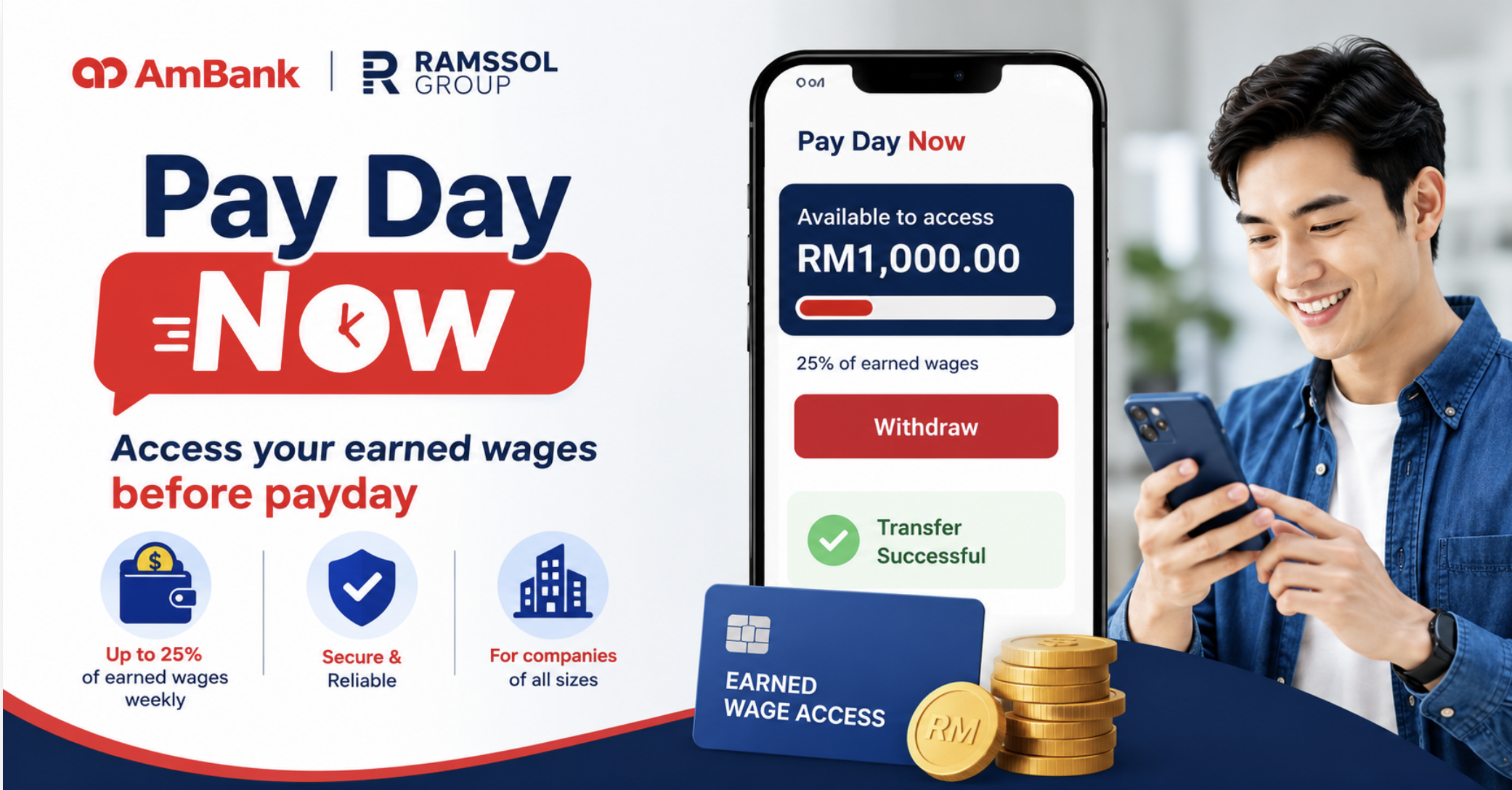
AmBank Group and Ramssol Group Berhad have officially launched Pay Day Now, Malaysia’s first Earned Wage Access (EWA) platform, allowing eligible employees to access part of the salary they’ve already earned before their official payday.
While the concept isn’t entirely new globally, it’s one of the first large-scale implementations in Malaysia and could reshape how employees manage short-term cash flow.
What Is Earned Wage Access (EWA)?
Earned Wage Access allows employees to withdraw a portion of the wages they have already earned instead of waiting until the end of the month.
Under the Pay Day Now platform:
- Employees can access up to 25% of their earned salary each week
- Funds are available before the official payday
- The service integrates directly with participating employers’ payroll systems
- Wage disbursements are processed securely through AmBank’s cash management infrastructure and Malaysia’s real-time payment network
Importantly, employees are not borrowing money.
They are simply accessing income they have already earned.
How Does It Work?
Imagine your monthly salary is RM4,000.
By the middle of the month, you’ve already earned approximately RM2,000.
Instead of waiting another two weeks, you may be able to withdraw a portion of that earned income, subject to your employer’s participation and the platform’s limits.
When payday arrives, the amount you’ve already withdrawn is deducted from your final salary payment.
Unlike a loan, there is no new debt being created because the money already belongs to the employee.
Not Everyone Can Use It
One important point many Malaysians misunderstand is that Pay Day Now is not a government programme and it is not automatically available to all employees.
Participation depends entirely on whether your employer signs up for the platform.
The solution is designed for:
- SMEs
- Large corporations
- Public-listed companies
- Government agencies
If your employer does not participate, employees cannot access the service.
Why Is This Being Introduced?
Malaysia’s labour market remains strong.
According to recent workforce statistics:
- Malaysia has approximately 16.7 million employed workers
- Unemployment remains low at 2.9%
- Labour force participation stands at 70.9%
Despite stable employment, many Malaysians still experience cash flow challenges between paydays.
Unexpected expenses such as:
- Car repairs
- Medical bills
- School expenses
- Family emergencies
can happen at any time.
Earned Wage Access aims to reduce the need for expensive short-term financing options.
Potential Benefits For Employees
If used responsibly, Earned Wage Access could offer several advantages.
Better Cash Flow
Employees no longer have to wait until month-end when unexpected expenses arise.
Less Dependence On High-Cost Borrowing
Instead of relying on:
- Credit cards
- BNPL
- Payday lenders
- Personal loans
employees may use money they’ve already earned.
Reduced Financial Stress
Money worries remain one of the biggest causes of workplace stress.
Having controlled access to earned wages could improve financial wellbeing for some workers.
Benefits For Employers
The platform isn’t only designed for employees.
Employers may also benefit through:
- Improved employee satisfaction
- Better staff retention
- Stronger employer branding
- Increased workforce engagement
As competition for talent grows, financial wellness programmes are becoming an increasingly attractive employee benefit.
But There Are Risks Too
Like any financial product, Earned Wage Access should be used carefully.
While accessing your own salary isn’t borrowing, taking money early means you’ll receive a smaller amount on your official payday.
Without proper budgeting, some employees may find themselves repeatedly withdrawing wages early every month.
This could create a cycle where future salaries always feel insufficient.
In other words, Earned Wage Access can solve short-term cash flow issues but shouldn’t replace proper financial planning.
Is Earned Wage Access Better Than BNPL?
Although both products improve short-term cash flow, they work very differently.
Earned Wage Access
- Uses salary you’ve already earned
- Does not create new debt
- Depends on employer participation
Buy Now Pay Later (BNPL)
- Lets consumers spend money before earning it
- Creates repayment obligations
- Can lead to late fees if payments are missed
For many financial experts, accessing earned income is generally considered lower risk than taking on new debt—provided it is used responsibly.
A New Direction For Employee Financial Wellness
The launch of Pay Day Now reflects a growing trend where employers are taking a more active role in supporting employees’ financial wellbeing.
Around the world, Earned Wage Access has been adopted by companies looking to reduce financial stress without increasing employee debt.
Malaysia now joins that movement with one of its first integrated platforms backed by a major financial institution.
Whether Earned Wage Access becomes widely adopted will largely depend on employer participation and how responsibly employees use the service.
Final Thoughts
Pay Day Now introduces a different way of thinking about salary.
Instead of waiting until month-end, eligible employees can access part of the income they’ve already earned to better manage unexpected expenses.
Used wisely, it could reduce reliance on expensive borrowing and improve cash flow.
However, it should be viewed as a financial flexibility tool—not a substitute for budgeting or emergency savings.
As more employers explore employee financial wellness programmes, Earned Wage Access could become another important feature of Malaysia’s evolving workplace benefits landscape.