

A family member or friend needs a loan and asks you to become their guarantor.
“It’s just a signature.”
Sounds harmless, right?
Not exactly.
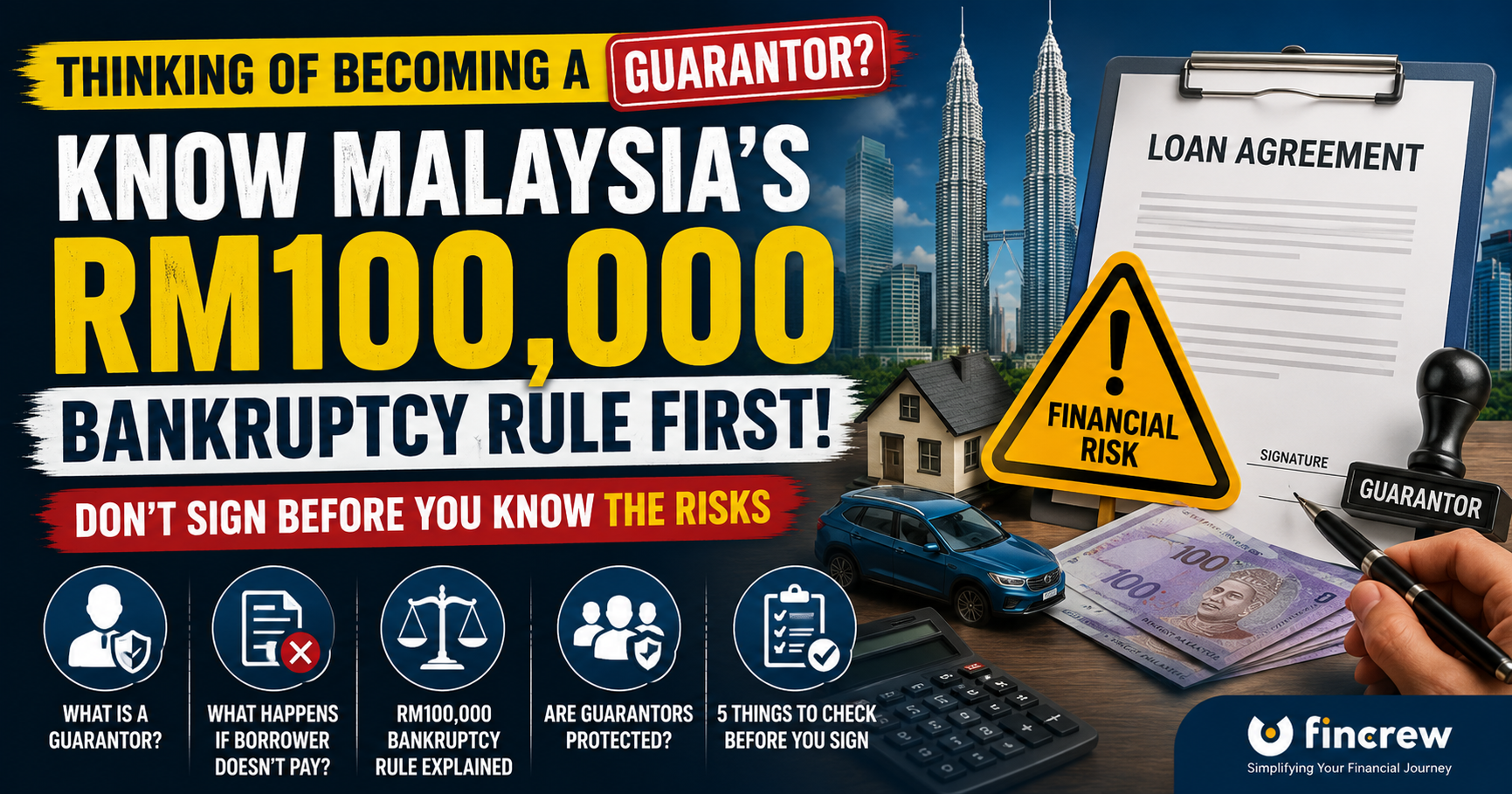
Becoming a guarantor means you may take on financial responsibility if the borrower fails to repay the debt. Before signing anything, Malaysians should understand what being a guarantor actually means — and why the RM100,000 bankruptcy threshold has been getting attention.
What Does Being a Guarantor Mean?
A guarantor is someone who agrees to be responsible for another person’s financial obligation if that person fails to meet it.
For example, your sibling applies for financing but the financial institution requires a guarantor. You agree and sign the necessary documents. Everything may be fine as long as repayments are made.
But if the borrower stops paying, the lender may seek repayment from the guarantor depending on the terms of the guarantee and applicable law. That’s why being a guarantor isn’t simply helping someone get their loan approved. You’re accepting a real financial responsibility.
What Is the RM100,000 Bankruptcy Rule?
In Malaysia, the current minimum debt threshold for a creditor to initiate bankruptcy proceedings is RM100,000.
However, this rule is often misunderstood.
Owing RM100,000 does not mean someone automatically becomes bankrupt. Bankruptcy involves a legal process and a court order. Similarly, owing less than RM100,000 doesn’t mean you can simply ignore the debt. Creditors may still have other legal options to recover money owed. The RM100,000 figure specifically relates to the minimum threshold for creditor-initiated bankruptcy proceedings.
Can a Guarantor Be Made Bankrupt?
This is where Malaysia’s insolvency rules become important.
Not every guarantor is treated the same way.
Malaysia’s Insolvency Act provides specific protection for people classified as “social guarantors”. A creditor cannot commence bankruptcy action against a social guarantor. For other guarantors, creditors must obtain permission from the court before commencing bankruptcy action.
So the idea that “once the debt reaches RM100,000, the guarantor automatically becomes bankrupt” is incorrect. The circumstances and type of guarantee matter.
What Is a Social Guarantor?
Under Malaysian insolvency law, certain guarantees given for non-commercial purposes can fall under the definition of a social guarantor. The distinction is important because social guarantors receive additional protection against bankruptcy proceedings.
However, this doesn’t mean you should treat becoming a social guarantor as risk-free.
Protection against bankruptcy proceedings doesn’t necessarily mean there are no other financial or legal consequences when a borrower fails to pay. If you’re signing a significant guarantee and aren’t sure what category it falls under, consider obtaining independent legal advice first.
What Happens If the Borrower Stops Paying?
Let’s say you guarantee financing for someone you trust. A few years later, that person loses their job or experiences serious financial difficulties and can no longer make the repayments. Depending on the guarantee you’ve signed, the lender may seek recovery from you.
And remember: people don’t always default because they’re irresponsible.
Job losses, failed businesses, medical emergencies and other unexpected events can completely change someone’s financial position.
Instead of asking:
“Do I trust this person?”
Ask:
“Could I afford it if this person became unable to pay?”
That’s a much better way to evaluate the risk.
Does Being Below RM100,000 Mean You’re Safe?
No.
The RM100,000 threshold relates to bankruptcy proceedings. It doesn’t determine whether a financial obligation is affordable. Even RM30,000 or RM50,000 could create serious financial problems for many households. Before becoming a guarantor, think about your own commitments.
Do you have a mortgage?
Are you planning to buy a house?
Do you have children to support?
Do you have enough emergency savings?
Would suddenly becoming responsible for someone else’s financial obligation put your own finances at risk? These questions matter more than simply looking at the bankruptcy threshold.
5 Things to Check Before Becoming a Guarantor
Before signing anything, make sure you understand these five things.
- How much are you potentially responsible for?
Don’t just look at the monthly repayment. Understand the total amount and the extent of your liability under the guarantee.
- Can you afford the worst-case scenario?
Imagine the borrower becomes completely unable to pay. Could you realistically handle the financial responsibility?
- Have you read the documents yourself?
Never sign because someone says, “It’s just standard paperwork.” Read what you’re agreeing to.
- What happens when payments are missed?
Ask the financial institution what happens in the event of default and under what circumstances the guarantor may be pursued.
- Could this affect your future financial plans?
Consider how the guarantee could affect your finances if something goes wrong, particularly if you’re planning major commitments such as buying a home or starting a business.
Already a Guarantor? Don’t Panic
If you’ve already signed as someone’s guarantor, there’s no reason to panic simply because you’ve learned about the RM100,000 threshold.
Instead, understand what you’ve signed. Keep copies of your guarantee documents and, where possible, stay aware of the repayment status.
Most importantly, don’t ignore official letters from banks, creditors, lawyers or courts if repayment problems arise. Getting professional advice early is usually better than waiting until a financial problem becomes much larger.
Final Thoughts
Becoming a guarantor is a bigger decision than many people realise.
Malaysia’s RM100,000 bankruptcy threshold is important, but it shouldn’t be the main reason you decide whether to sign.
The most important question is much simpler:
If the borrower stopped paying tomorrow, could you afford the consequences?
Malaysia’s insolvency laws provide certain protections for guarantors, particularly social guarantors, but that doesn’t make every guarantee risk-free. Before signing, understand the amount involved, read the documents carefully and consider the worst-case scenario.
Helping someone financially is generous. Just make sure helping them doesn’t put your own financial future at risk.
Disclaimer: This article is for general educational purposes only and does not constitute legal or financial advice. Guarantee and insolvency matters may vary depending on individual circumstances. Consider seeking professional advice before making significant financial or legal decisions.