

Most Malaysians check their bank balances regularly.
But what happens to money sitting in a bank account that hasn’t been touched for years?
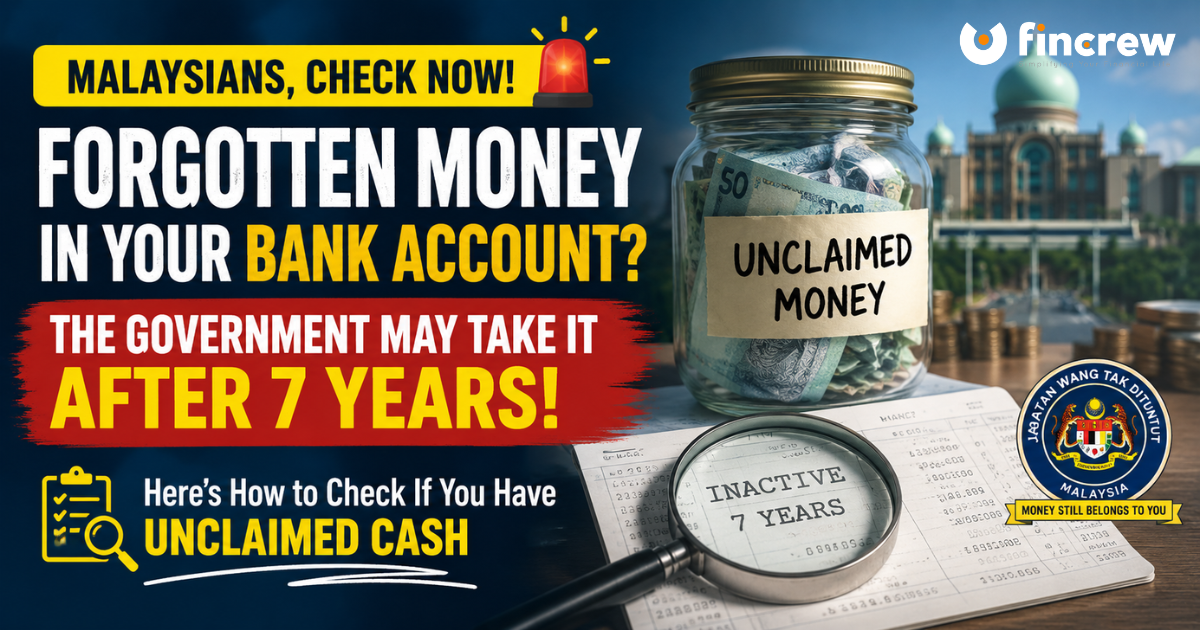
Many people are surprised to learn that under Malaysian law, funds left inactive for an extended period do not stay with the bank forever. Instead, they may eventually be transferred to the government as Unclaimed Money (Wang Tak Dituntut, WTD).
The good news? The money still belongs to you — and you may be able to claim it back.
What Happens to Inactive Bank Accounts?
In Malaysia, bank accounts that remain inactive for a prolonged period may be classified as dormant.
If no transactions occur and the account holder does not respond to notifications from the bank, the remaining balance can eventually be transferred to the Registrar of Unclaimed Moneys under the Ministry of Finance.
This process is governed by the Unclaimed Moneys Act 1965.
Many Malaysians only discover this years later when they realise an old savings account, fixed deposit, dividend payment, or insurance payout has been transferred into the government’s unclaimed money system.
The 7-Year Rule Explained
One of the most common misconceptions is that the government “takes” your money permanently.
In reality, after certain funds remain unclaimed for seven years, they may be transferred to the government’s unclaimed money registry.
Examples include:
- Savings account balances
- Current account balances
- Fixed deposits
- Insurance claim payments
- Dividend payments
- Refunds
- Salaries that were never collected
- Trade creditor balances
The ownership of the funds does not change.
The money remains claimable by the rightful owner or their legal beneficiaries.
How Much Unclaimed Money Is Sitting in Malaysia?
Every year, billions of ringgit worth of unclaimed money are recorded in Malaysia.
Many cases involve:
- Forgotten bank accounts
- Old employment-related payments
- Deceased family members’ assets
- Unclaimed insurance benefits
- Forgotten investment accounts
In some cases, people discover hundreds of ringgit.
Others discover thousands or even tens of thousands of ringgit they never knew existed.
How to Check If You Have Unclaimed Money
The easiest way is through the government’s official eGUMIS portal.
eGUMIS is an online system that allows Malaysians to search for potential unclaimed funds under their name.
Typically, users need to:
- Visit the official eGUMIS website.
- Register an account.
- Verify their identity.
- Search using their identification details.
- Submit a claim if eligible funds are found.
The process can usually be completed online.
Common Reasons Malaysians Have Unclaimed Money
Many people assume they would know if they had money waiting for them.
Unfortunately, that’s not always the case.
Common reasons include:
Changing Banks
People close accounts and forget about small remaining balances.
Moving House
Letters and notifications are sent to old addresses.
Job Changes
Unclaimed salaries, bonuses, or reimbursements remain outstanding.
Forgotten Investments
Old investment accounts or dividends go unnoticed for years.
Family Estates
Beneficiaries may not know that deceased relatives had dormant accounts.
Why Financial Organisation Matters
Unclaimed money is often a symptom of poor financial record keeping.
Many Malaysians have:
- Multiple bank accounts
- Various insurance policies
- Unit trust investments
- EPF and retirement savings
- Dividend-paying investments
Without proper documentation, it’s easy to lose track of assets over time.
This is why maintaining a personal financial inventory is increasingly important.
Fincrew’s Take
Checking eGUMIS should be part of every Malaysian’s financial housekeeping routine.
It takes only a few minutes and could reveal forgotten funds that rightfully belong to you or your family.
More importantly, this serves as a reminder that financial planning isn’t only about growing wealth — it’s also about keeping track of what you already own.
Before opening another savings account or investment portfolio, make sure you know where all your existing money is.
You might be surprised by what you find.