
Every few months, a debate resurfaces online:
“If someone can afford a Ferrari, what’s RM40,000 a year in road tax and insurance?”
Then comes the more controversial take:
“If the penalty for a crime is money, the law is only for poor people.”
But here’s the reality — Malaysia’s road tax and insurance framework isn’t about wealth. It’s about usage. And understanding that distinction can save you from making a very expensive mistake.
Road Tax in Malaysia Is Not an Ownership Fee
Many Malaysians assume road tax is a yearly ownership charge. It sounds logical. But legally, that’s not how it works.
In Malaysia, road tax is a licence for public road usage, not a tax on owning a vehicle. If your car never touches a public road, the obligation does not activate. This is where confusion begins.
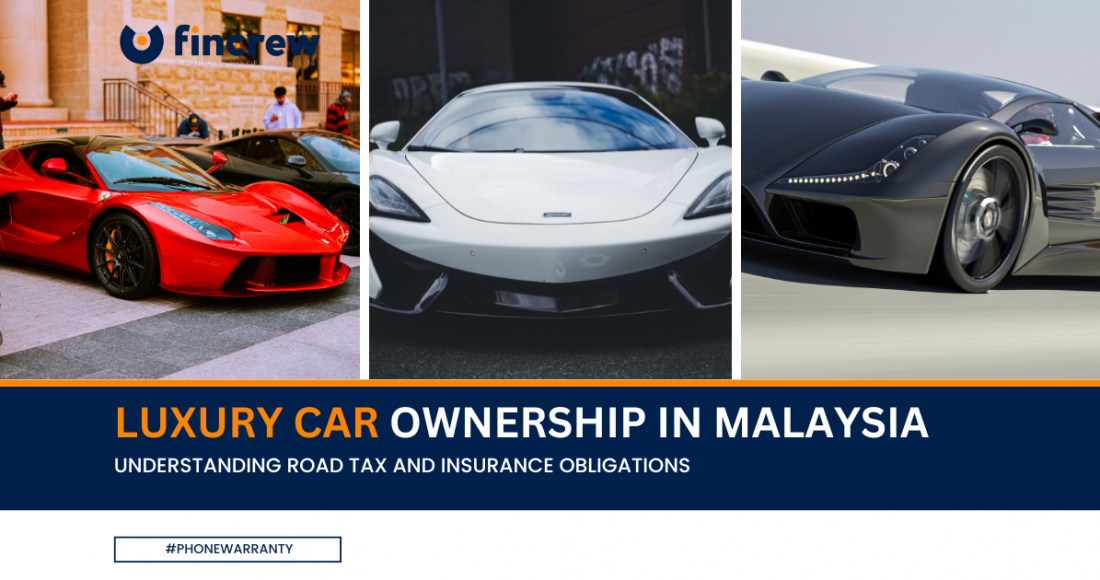
The Ferrari 488 Example
Take a Ferrari 488 with a 3.9L engine. In Malaysia:
- Annual road tax can exceed RM6,000
- Comprehensive insurance can easily exceed RM35,000 annually
- Total yearly compliance cost may cross RM40,000
For a car that’s rarely driven, insurance — not road tax — becomes the real cost driver. So what happens if the owner stores the vehicle?
When Renewal Is Not Required
Malaysia does not penalise unused vehicles. If a Ferrari is parked on private property and never driven on public roads:
- No road tax renewal is required during storage
- No insurance renewal is required during storage
- No fines accumulate simply because time has passed
Road tax does not stack like unpaid debt. Insurance cannot be back-purchased for inactive years.
When the owner decides to use the car again, renewal simply starts fresh. Only the new active period is payable. That’s the legal framework.
But The Rule Is Absolute: Do Not Drive Without Renewal
The moment the wheels touch a public road, the Road Transport Act applies.
Driving without valid road tax:
-
Fine of up to RM3,000
Driving without valid insurance:
- Fine of up to RM1,000
- Possible vehicle seizure
- Exposure to unlimited third-party liability
Violations arise from usage — not ownership. The act of driving creates legal and financial liability.
Why Some People Think Fines Are “Cheaper”
On paper, someone might compare:
RM40,000 annual compliance
vs
RM4,000 maximum compound per offence
Mathematically, it may appear cheaper to risk fines. But that logic ignores accident risk. Fines are capped.
Accident liabilities are not. One uninsured accident involving injury, luxury vehicle damage, or litigation can result in six or seven-figure exposure. Insurance pricing reflects risk probability and severity — not punishment.
Insurance Is About Financial Survival
Supercars are expensive to repair.
- Specialised parts.
- Carbon fibre panels.
- Imported components.
- Skilled labour.
Even minor damage can escalate quickly. More importantly, third-party injury claims carry no practical ceiling. This is why insurance dominates ownership economics. It is not a compliance burden — it is a financial firewall.
Myth vs Legal Reality
Myth: Road tax is a yearly ownership tax.
Reality: It is a licence for public road usage.
Myth: If you don’t renew for years, you must back-pay.
Reality: Renewal restarts from the new active period.
Myth: Paying fines is cheaper than insurance.
Reality: Fines are capped. Accident liabilities are not.
Malaysia’s system is usage-based and logically structured.
Inactive vehicles do not create automatic violations.
Active vehicles require disciplined protection.
The Bigger Financial Lesson
This topic isn’t about Ferraris. It’s about risk management. Whether you drive a Myvi or a 488:
- Compliance cost is predictable
- Accident exposure is unpredictable
- Insurance transfers catastrophic risk away from you
Smart financial behaviour isn’t about avoiding fees. It’s about understanding when obligations begin — and what happens if you ignore them.
At Fincrew, we believe financial literacy starts with understanding how systems actually work — not how social media explains them. Before making decisions based on “math that looks attractive,” always ask:
What risk am I really carrying?