
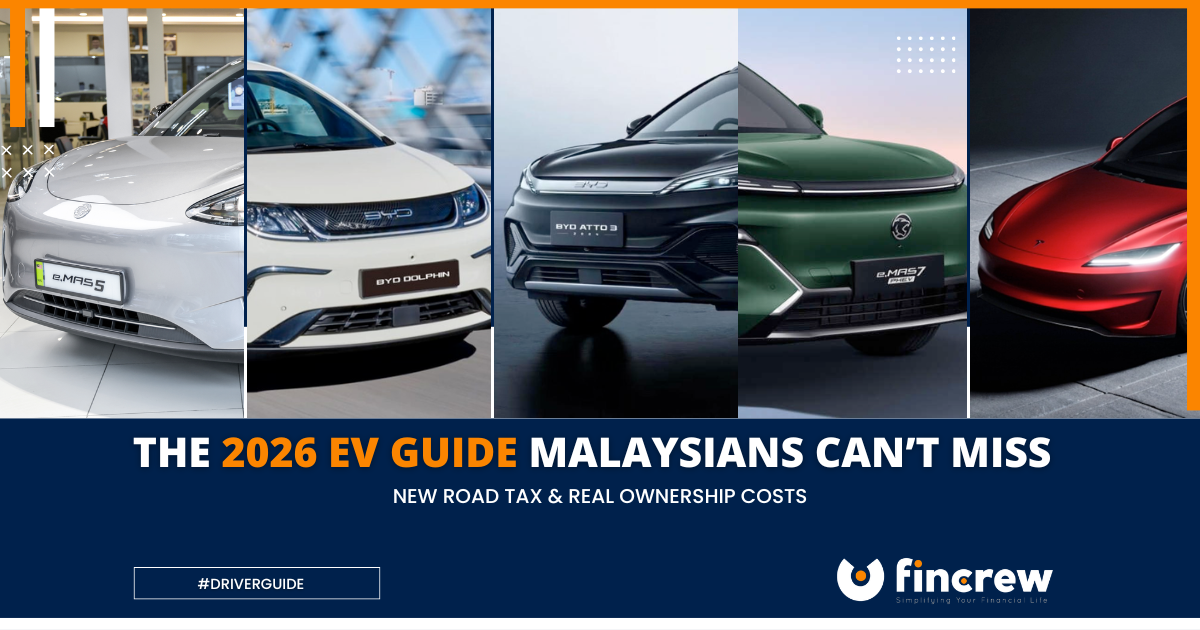

Malaysia’s EV landscape is entering a major turning point in 2026.
Starting January 1, 2026, the government will officially introduce a new power-based EV road tax structure, ending the current EV road tax exemption period.
At first glance, many Malaysians may see this as “EVs getting more expensive.”
But the bigger story is actually the opposite.
Despite the return of road tax, EVs are still expected to remain significantly cheaper to own compared to many petrol vehicles — especially as global fuel prices become increasingly unstable.
And with the ongoing Middle East conflict continuing to pressure global oil markets, the timing of this transition could not be more important.
Why 2026 Could Be a Turning Point for Malaysian Drivers
Malaysia currently spends between RM6 billion to RM7 billion every month on fuel subsidies alone.
This massive cost has surged due to:
- Rising global crude oil prices
- Ongoing geopolitical tensions in the Middle East
- Currency pressure
- Imported refined fuel costs
Although subsidised RON95 remains controlled, the long-term sustainability of fuel subsidies has become a growing concern.
This is one of the key reasons why:
- EV adoption is accelerating
- Charging infrastructure is expanding
- New EV policies are being introduced
The shift is no longer just about “green technology.”
It is increasingly about:
- Long-term transportation costs
- National fiscal sustainability
- Reducing dependency on volatile global oil markets
Malaysia’s New EV Road Tax Structure Explained
Unlike petrol vehicles, EV road tax in Malaysia will now be calculated based on:
- Motor power output (kW)
- Tiered pricing groups
- Base fee + incremental blocks
This creates a more transparent system tied directly to vehicle performance.
How the EV Road Tax Formula Works
The Ministry of Transport uses a:
“Base + Incremental” System
Step 1 — Identify Your Power Group
Your EV is grouped based on its motor power (kW).
Step 2 — Apply Base Price
Each group comes with a base fee.
Step 3 — Add Incremental Charges
Extra charges are added for every additional 10kW block.
Example: Proton e.MAS 7
- Power: 160kW
- Base Fee: RM80
- Additional Power Blocks: 5
Final Annual Road Tax:
RM180
Example: Proton e.MAS 5 Prime
- Power: 58kW
- Base Fee: RM20
- Additional Block: 1
Final Annual Road Tax:
RM30
That is still cheaper than many motorcycles on Malaysian roads.
2026 EV Road Tax Comparison
| EV Model | Power | 2026 Annual Road Tax |
|---|---|---|
| Proton e.MAS 5 Prime | 58kW | RM30 |
| BYD Dolphin Standard | 70kW | RM40 |
| BYD Atto 3 | 150kW | RM160 |
| Proton e.MAS 7 | 160kW | RM180 |
| Tesla Model 3 RWD | 208kW | RM280 |
| Denza D9 AWD Premium | 275kW | RM485 |
| Tesla Model Y LR AWD | 378kW | RM915 |
| Tesla Model Y Performance | 393kW | RM1,015 |
Even premium EVs remain competitively priced compared to equivalent petrol vehicles.
EVs Are Still Far Cheaper Than Many Petrol Cars
Despite the return of road tax, EV ownership still offers major savings:
Lower Fuel Costs
Charging remains cheaper than petrol refueling.
Lower Maintenance Costs
EVs have:
- Fewer moving parts
- No engine oil
- Reduced servicing needs
Lower Road Tax
Many EVs still enjoy savings of:
- 70% to 95% compared to petrol equivalents
For example:
A Proton e.MAS 5 paying RM30 yearly road tax remains significantly cheaper than many traditional compact cars.
The Hidden Cost Malaysians Must Understand: Home Charging
However, the biggest EV ownership cost in 2026 may not actually be road tax.
It may be:
Home charging infrastructure.
As EV battery sizes and charging speeds increase, Malaysian homeowners will need safer and more capable electrical setups.
Recommended Charging Setup by Vehicle
| EV Model | Recommended Charger |
|---|---|
| Proton e.MAS 5 | 7.4kW Smart Wallbox |
| BYD Atto 3 | 7.4kW Smart Wallbox |
| Tesla Model 3 | 11kW 3-Phase Charger |
| Denza D9 | 22kW Wallbox |
Higher-end EVs place much heavier loads on residential electrical systems.
Why Proper EV Installation Matters
Malaysia’s climate and electrical infrastructure create additional risks.
Professional EV installers now strongly recommend:
RCD Type B Protection
Protects against dangerous DC leakage.
Load Management Systems
Prevents house power trips during peak charging.
Surge Protection
Critical due to Malaysia’s frequent lightning activity and voltage surges.
Without proper installation, owners risk:
- Charger damage
- Electrical faults
- Expensive repair costs
- Potential fire hazards
Is 2026 Still the Right Time to Buy an EV?
For many Malaysians, the answer may still be yes.
The reality is:
- Petrol costs remain uncertain globally
- Subsidy pressures continue rising
- EV technology is improving rapidly
- More affordable EVs are entering the market
The key shift is psychological.
Malaysia is moving from:
“Tax-free EVs”
to:
“Low-cost EV ownership.”
And that still represents a major long-term financial advantage.
Fincrew’s Take
The 2026 EV road tax update is not just an automotive story. It is part of a larger economic transition happening globally. With rising geopolitical tensions and billions spent monthly on fuel subsidies, Malaysia is slowly preparing for a future where dependence on petrol becomes increasingly expensive and financially difficult to sustain. EVs are no longer just about environmental trends.
They are becoming part of:
- Household financial planning
- Energy security
- Long-term transportation cost management
For Malaysians considering the switch, the smartest approach is not just comparing showroom prices.
It is understanding the full ownership ecosystem:
- Road tax
- Charging setup
- Electricity usage
- Long-term savings
- Future fuel uncertainty
Because the drivers who prepare early may ultimately benefit the most from the transition ahead.